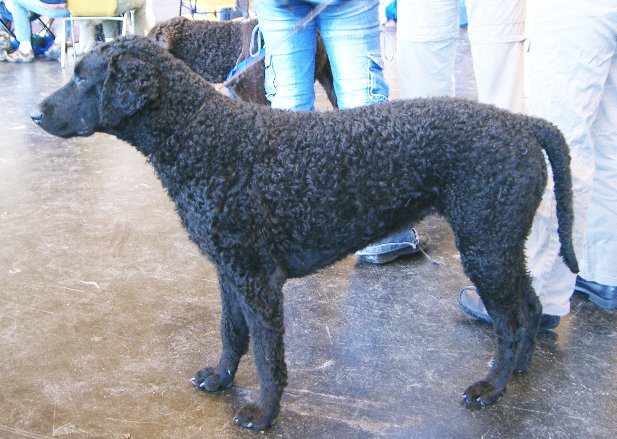
Curly Coated Retriever
One of the oldest retriever breeds, the Curly Coated Retriever is a self-assured, tireless working dog with a distinctive coat of tight curls. Equally excellent in the field and as a loyal companion.
Do Curly Coated Retrievers shed?
No, Curly Coated Retrievers shed very little. This is one of their most appealing traits for people who'd rather not hoover twice a day. You'll still want to brush them regularly to keep their coat healthy, but you won't find hair on every surface you own.
Are Curly Coated Retrievers good with kids?
Yes, Curly Coated Retrievers are generally good with children. They tend to be confident and intelligent, which makes them a natural fit for busy family life. Always supervise any dog around young children, regardless of breed. Their high energy actually works in their favour here, they can keep up with kids for hours.
Are Curly Coated Retrievers good with cats?
Curly Coated Retrievers can get along well with cats, especially if raised together from puppyhood. Their confident nature means they're generally not fixated on chasing. Introduce them slowly, keep the cat's exit routes open and never force interaction. Most Curly Coated Retrievers and cats eventually settle into an easy coexistence, sometimes even becoming friends.
Are Curly Coated Retrievers easy to train?
Curly Coated Retrievers are moderately trainable, capable dogs, but they have opinions and will test boundaries. Positive reinforcement works well. Avoid harsh corrections, which can make them shut down or become anxious. Consistency is the key word with this breed. Everyone in the household needs to use the same rules and commands, or they'll find the inconsistency and exploit it.
Do Curly Coated Retrievers bark a lot?
Curly Coated Retrievers bark at a moderate level, they'll alert you to strangers or unusual sounds, but won't bark continuously for no reason. Separation anxiety can increase barking in any breed. If left alone too long, a Curly Coated Retriever may become vocal, something to factor in if you work long hours. With consistent training ("quiet" command + reward), most Curly Coated Retrievers can be taught when barking is and isn't appropriate.
Are Curly Coated Retrievers hypoallergenic?
No, Curly Coated Retrievers are not hypoallergenic. They shed low amounts of hair and dander, which is the main allergen trigger for most people. If allergies are a dealbreaker, consider a Poodle, Bichon Frise, or a Poodle-cross (Cockapoo, Cavapoo, Labradoodle) instead, all produce much less dander.
How much exercise does a Curly Coated Retriever need?
Curly Coated Retrievers need 90–120+ min/day of exercise daily. This is a highly active breed, one short walk won't cut it. They need sustained, vigorous exercise. Without it, expect destructive behaviour, hyperactivity at home, and a generally miserable dog. Running, hiking, fetch, swimming, agility, this breed is up for all of it.
Mental exercise matters as much as physical. A Curly Coated Retriever with a bored brain will find its own entertainment, usually involving your sofa or your shoes. Training sessions, puzzle feeders, and nose-work games all count.
Curly Coated Retriever health problems
Like all breeds, Curly Coated Retrievers are prone to certain conditions. Knowing about them upfront means earlier detection, better outcomes, and fewer surprise vet bills.
- Hip dysplasia. Common in larger breeds, causes arthritis and mobility issues. Check parents have been hip-scored.
- Elbow dysplasia. Similar to hip dysplasia, affects the front legs.
- Obesity. The most preventable health problem across all dog breeds. Keep them at a healthy weight.
- Annual vet checks. Catching problems early makes all the difference.
How long do Curly Coated Retrievers live?
Curly Coated Retrievers typically live 10–12 years. This is fairly typical for a large-sized breed.
Lifespan is heavily influenced by weight management, exercise, genetics, and access to regular vet care. A Curly Coated Retriever at a healthy weight, with good genetics and regular check-ups, will typically live toward the top of that range.
How much does a Curly Coated Retriever cost in the UK?
A Curly Coated Retriever puppy from a reputable KC-registered UK breeder typically costs £800–£2,000.
If you see a Curly Coated Retriever puppy advertised for significantly less than £800, be very cautious. Low prices are the most common red flag for puppy farms.
The purchase price is just the start. First-year costs typically include:
- Vaccinations: ~£80–120
- Neutering/spaying: £200–400 depending on size and vet
- Microchipping (mandatory in UK): ~£20–30
- Bed, crate, leads, collar: £100–250
- Food (per year): £400–£1,200+ depending on size and diet
- Pet insurance: £35–£70/month (see below)
- Routine vet visits: £50–200/year
Total first-year cost beyond the puppy price: typically £1,500–£3,000.
Curly Coated Retriever pet insurance
Pet insurance for a Curly Coated Retriever in the UK typically costs £35–£70/month for comprehensive lifetime cover.
Lifetime cover is strongly recommended over cheaper time-limited or maximum-benefit policies. Once a condition is diagnosed and treated, lifetime cover continues to pay for it every year. Time-limited policies exclude it after 12 months, exactly when chronic conditions become expensive.
Compare quotes from Petplan, ManyPets, Waggel, and Animal Friends, all have strong reputations for actually paying out claims. Always check the annual limit (aim for £7,000+ per condition) and whether hereditary conditions are covered.
Costs & owning a Curly Coated Retriever
What a Curly Coated Retriever really costs in the UK: purchase, insurance and yearly budget.
Similar large breeds
Essentially a large puppy that never grows up. Boxers are boisterous, …
A flame-red aristocrat that behaves like a naughty puppy forever. Stun…
The Grey Ghost of the dog world. Elegant, fast, and absolutely cannot …
The big fluffy mop from the Dulux adverts. Warm, loyal, and absolutely…